Vegan Gluten-Free Kit Kat Cookies Recipe
Let me tell you, this Vegan Gluten-Free Kit Kat Cookies Recipe is a game changer. If you love that classic Kit Kat crunch but want to avoid gluten and animal products, you’ve hit the jackpot. These cookies are crispy, fudgy, and coated in luscious dark chocolate – everything you crave with none of the guilt. Plus, they’re surprisingly simple to make! Stick around and I’ll walk you through how to get these treats perfect every time.
Why This Recipe Works
- Perfect Texture: The almond flour keeps the cookies tender yet crisp, mimicking the iconic Kit Kat crunch beautifully.
- Simple, Clean Ingredients: No weird stuff here—just wholesome pantry staples that make the recipe accessible and healthy.
- Easy to Customize: Whether you want nut-free or a different nut butter, you can tweak this without losing that amazing flavor.
- No Chill Dough Needed: You’ll love how quickly you can prep and bake these without waiting around for dough to firm up.

Ingredients & Why They Work
The ingredients in this Vegan Gluten-Free Kit Kat Cookies Recipe come together like magic. I love how almond flour lends a mild nuttiness without overpowering the classic chocolatey flavors we all adore. Using coconut sugar keeps the sweetness natural and subtle. And peanut butter in the fudge filling adds that creamy, rich note that takes these from “meh” to “oh wow!”.

- Blanched almond flour: This forms your gluten-free cookie base; it’s finely ground for a tender, crisp bite. You can also use tigernut flour for a nut-free option.
- Coconut sugar: Adds sweetness with a hint of caramel flavor, less processed than regular sugar.
- Ground flaxseed: Works as an egg replacer here, giving the dough structure and binding everything perfectly.
- Salt: Just a pinch to balance sweetness and highlight flavors.
- Coconut oil: Provides healthy fat and helps crisp up the cookies once baked.
- Water: Helps bind the dough and keeps it from drying out.
- Vanilla extract: Adds that warm, familiar aroma enhancing the overall flavor.
- Dark chocolate: Used in both the fudge filling and coating—look for dairy-free varieties for a true vegan treat.
- Peanut butter (or Sunbutter): Gives the fudge filling a creamy, nutty richness, perfect for that Kit Kat vibe.
Make It Your Way
I like to play with the fudge filling depending on what I’m craving. Sometimes I swap peanut butter for almond or even sunflower seed butter to keep it nut-free. You might find that adding a pinch of sea salt to the fudge layer gives a really lovely balance to the sweetness. Feel free to customize and make this classic cookie-bar your own.
- Nut-free variation: I’ve swapped tigernut flour for almond flour and Sunbutter for peanut butter to make this safe for nut allergies, and it still comes out fantastic!
- Sugar swap: If you want it a bit less sweet, try using a bit less coconut sugar or switching to maple syrup—but keep in mind the texture might slightly change.
- Flavor boost: Adding a dash of cinnamon or espresso powder to the cookie dough adds an unexpected depth—try it once and you might love it as much as I do.
Step-by-Step: How I Make Vegan Gluten-Free Kit Kat Cookies Recipe
Step 1: Mix Your Cookie Dough
Start by preheating your oven to 350°F (175°C). In a mixing bowl, combine almond flour, coconut sugar, ground flaxseed, and salt. I find mixing the dry ingredients first helps avoid clumps. Then, stir in the melted coconut oil, water, and vanilla. Use a spatula to bring it all together before kneading gently with your hands. The dough should feel smooth and pliable, not too sticky.
Step 2: Roll & Cut Into Bars
Place your dough between two sheets of parchment paper (trust me, this keeps things super easy). Roll it out to about an eighth of an inch thick. Use a pizza cutter or sharp knife to make rectangles roughly 3.5 inches by ¾ inch—the classic Kit Kat size. Don’t sweat if your edges aren’t perfect; you can re-roll scraps to bake more cookies.
Step 3: Bake & Cool
Pop your cut-out dough sheets (with parchment) onto a baking sheet and bake for 8-10 minutes. You’ll notice the cookies firming up but still soft—they’ll crisp up as they cool. Use your knife or pizza cutter to gently separate them while warm, then let them cool on a wire rack for best results.
Step 4: Prepare the Fudge Filling
Gently melt your dark chocolate in a bowl over hot water or in short bursts in the microwave, stirring often. Once melted, mix in the peanut (or sunflower) butter until smooth and creamy. Let this cool and thicken for about 10 minutes—think frosting consistency—before spreading.
Step 5: Assemble Your Kit Kat Layers
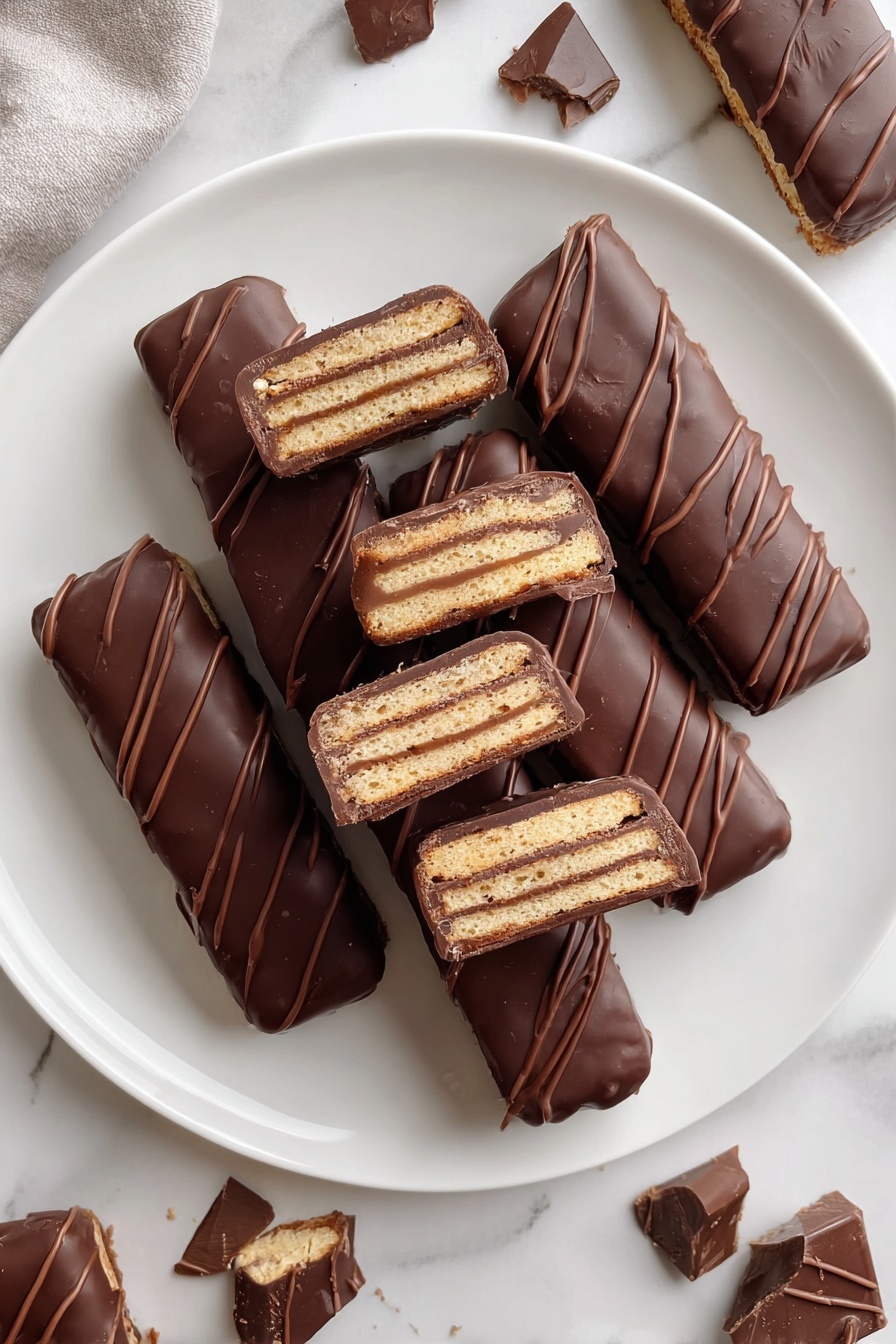
Each “Kit Kat” bar consists of three cookie strips and two layers of fudge. Start with a cookie strip, spread a layer of fudge, add another cookie, more fudge, and top with the last cookie. Lay them out on a parchment-lined tray and pop into the freezer for about 20 minutes to set.
Step 6: Dip & Decorate with Chocolate Coating
While your bars chill, melt the remaining dark chocolate with coconut oil over low heat, stirring often. Take your set bars from the freezer and dip them one by one into the chocolate, letting excess drip off before placing them back on parchment to set. When you’re done, drizzle leftover chocolate on top for that fancy finish!
Tips from My Kitchen
- Rolling Between Parchments: This trick prevents dough from sticking and keeps the thickness even without extra flour.
- Knife or Pizza Cutter: Using a pizza cutter to slice while the dough is warm helps keep clean edges.
- Freeze Before Chocolate Coating: Setting the bars in the freezer helps the chocolate harden quicker and prevents melting.
- Use Quality Chocolate: The better your chocolate, the more decadent the outcome, so pick your favorite vegan-friendly bar.
How to Serve Vegan Gluten-Free Kit Kat Cookies Recipe
Garnishes
I like to sprinkle a little flaky sea salt on top right after drizzling the final chocolate layer. It adds a nice savory contrast that makes the chocolate flavor pop. You can also dust with some cocoa powder or crushed nuts for an extra touch when you’re feeling fancy.
Side Dishes
These cookies pair beautifully with a cup of strong black coffee or creamy oat milk. For dessert, I love serving them alongside fresh berries or coconut whipped cream to lighten things up.
Creative Ways to Present
Once, for a birthday party, I stacked these bars in a layered “cake” shape on a pretty platter and garnished with edible flowers. It was a huge hit! You could also wrap individual bars in parchment and tie with colorful twine for gift-giving.
Make Ahead and Storage
Storing Leftovers
These cookies keep well in an airtight container in the fridge for up to a week. I always recommend separating layers with parchment paper to prevent sticking. The fridge helps maintain their structure without the chocolate melting too quickly.
Freezing
If you want to stash some for later, freeze individual bars in a single layer on a baking sheet before transferring them to a freezer-safe bag. They’ll keep great for 2-3 months and pop out one at a time for snacking emergencies.
Reheating
For the best texture, I let frozen cookies thaw at room temperature for about 10-15 minutes before eating. Avoid microwaving as it messes with the chocolate coating. If you want them softer, a quick 5-minute warm-up in a low-temperature oven (around 275°F) does the trick.
FAQs
-
Can I use other flours besides almond flour in this Vegan Gluten-Free Kit Kat Cookies Recipe?
Absolutely! Almond flour gives a nice texture and flavor, but you can substitute with tigernut flour for a nut-free version or even a gluten-free all-purpose blend. Just note that texture may vary slightly, so you might need to adjust the liquid amounts a bit.
-
Is it necessary to freeze the assembled bars before dipping in chocolate?
Freezing the bars before dipping really helps the chocolate set quickly and keeps your layers intact. While you can skip this step, expect a messier dip and longer setting time.
-
How long do these Vegan Gluten-Free Kit Kat Cookies keep fresh?
Stored properly in the fridge, they’re perfect for up to a week. If kept at room temperature, the chocolate may soften too much, so refrigeration is best.
-
Can I make this recipe nut-free?
Yes, just replace almond flour with tigernut flour and swap peanut butter for sunflower seed butter or another seed butter. It’s a great way to make these allergy-friendly without losing flavor.
-
Does the cookie dough need to chill before baking?
Nope! This recipe is designed to be quick and easy—roll, cut, and bake right away. Just be gentle while handling the dough so it doesn’t tear.
Final Thoughts
I’m so excited for you to try this Vegan Gluten-Free Kit Kat Cookies Recipe. It’s the kind of treat that feels indulgent but is actually packed with wholesome ingredients. Every bite brings back the joy of that iconic candy bar, with the added comfort of knowing it fits right into your dietary needs. Trust me, once you make them, these will be your go-to when you want something sweet, crunchy, and utterly satisfying. Enjoy baking and snacking—we’re in this together!
Print
Vegan Gluten-Free Kit Kat Cookies Recipe
- Prep Time: 40 minutes
- Cook Time: 10 minutes
- Total Time: 50 minutes
- Yield: 12 Kit Kat Bars
- Category: Dessert
- Method: Baking
- Cuisine: American
- Diet: Gluten Free
Description
This Healthy Kit Kat Recipe is a delicious gluten-free and vegan alternative to the classic treat. Made with almond flour cookies, rich peanut butter fudge filling, and a dark chocolate coating, it offers a guilt-free indulgence perfect for anyone seeking a wholesome dessert.
Ingredients
Cookies
- 1 ¼ cup blanched almond flour (or tigernut flour) (115g)
- 3 Tbsp coconut sugar
- 1 Tbsp ground flax
- ⅛ tsp salt
- 3 Tbsp melted coconut oil
- 1 Tbsp water
- 1 tsp vanilla extract
Fudge Filling
- 2 Tbsp dark chocolate
- 3 Tbsp peanut butter (or Sunbutter)
Chocolate Coating
- 1 cup dark chocolate (5oz)
- ½ Tbsp coconut oil
Instructions
- Preheat Oven: Preheat your oven to 350 degrees F to prepare for baking the cookies.
- Mix Dry Ingredients: In a medium bowl, combine almond flour, coconut sugar, ground flax, and salt thoroughly.
- Add Wet Ingredients: Mix in melted coconut oil, water, and vanilla extract using a spatula, then knead the dough by hand until well combined.
- Roll Dough: Place the dough between two sheets of parchment paper and roll it out to about ⅛ inch thick using a rolling pin.
- Cut Cookies: Using a knife or pizza cutter, cut the dough into rectangles approximately 3.5 inches by 0.75 inches. Set aside excess dough for re-rolling.
- Bake Cookies: Transfer the parchment paper with cookies onto a baking sheet and bake for 10 minutes at 350 degrees F.
- Cool Cookies: Remove from oven, separate the cookies with a knife or cutter, and cool on the pan for 5-10 minutes before transferring to a wire rack to cool completely.
- Prepare Fudge Filling: Melt the dark chocolate and stir in peanut butter until smooth. Allow to cool for about 10 minutes until thickened like frosting.
- Assemble Kit Kats: Spread the fudge filling between three cookies, layering two layers of fudge per Kit Kat. Place the assembled bars on a lined baking sheet and freeze until set.
- Melt Chocolate Coating: In a small saucepan over low heat, melt dark chocolate and coconut oil together, stirring frequently to combine.
- Dip Kit Kats: Remove the frozen bars and dip each one individually into the melted chocolate coating. Place back on the lined baking sheet to set.
- Finish Decoration: Drizzle any remaining melted chocolate over the coated Kit Kats for an elegant finish, then allow the chocolate to fully set before serving.
Notes
- Use tigernut flour instead of almond flour for a nut-free version.
- Grind whole flax seeds fresh using a coffee grinder for best results in the ground flax ingredient.
- Ensure the fudge filling is cool and thick before spreading to prevent cookies from becoming soggy.
- Freeze assembled Kit Kats well before dipping to maintain their shape.
- Store finished Kit Kats in the refrigerator for up to one week to keep them fresh.
Nutrition
- Serving Size: 1 Kit Kat bar
- Calories: 180 kcal
- Sugar: 8 g
- Sodium: 40 mg
- Fat: 12 g
- Saturated Fat: 6 g
- Unsaturated Fat: 5 g
- Trans Fat: 0 g
- Carbohydrates: 16 g
- Fiber: 3 g
- Protein: 4 g
- Cholesterol: 0 mg