Short Rib Ragu with Pasta Recipe
If you’re looking for a hearty, soul-warming meal that takes your pasta night up a notch, you’ve got to try this Short Rib Ragu with Pasta Recipe. It’s the kind of dish that fills the kitchen with mouthwatering aromas and wraps you in cozy comfort from the first bite. I promise—once you make this, it’ll probably become your go-to when you want something special but still classic and approachable. Stick around; I’ll walk you through every step to make sure your ragu is nothing short of fan-freaking-tastic.
Why This Recipe Works
- Rich, Tender Meat: Slow-simmering short ribs make this ragu insanely flavorful and melt-in-your-mouth tender.
- Balanced Flavor: The combination of red wine, herbs, and a touch of vinegar creates a perfectly layered sauce.
- Versatile Pairing: Best served with hearty pastas like pappardelle or tagliatelle that hold the ragu beautifully.
- Comfort Food at Its Best: It’s perfect for entertaining or a cozy night in – satisfying and impressive without being complicated.

Ingredients & Why They Work
This Short Rib Ragu with Pasta Recipe is a love letter to simple, high-quality ingredients that build rich flavor over time. Choosing the right short ribs and fresh aromatics sets you up for success, and I’ll share tips so you shop like a pro.

- Beef short ribs: I prefer deboned ribs cut into cubes for convenience, but bone-in ribs give the sauce extra depth. Look for well-marbled pieces.
- Light olive oil: It’s mild and perfect for searing without overpowering flavors. Vegetable or avocado oil works too.
- White onion: Finely diced for sweetness and body in the sauce—fresh is best here.
- Celery and carrot: Classic soffritto base adds natural sweetness and complexity.
- Garlic cloves: Mince finely to infuse that warm, savory note without overpowering.
- Tomato paste: Boosts richness and umami; don’t skip this little powerhouse ingredient.
- Red wine: Adds acidity and depth; choose something you’d enjoy sipping.
- Broth: Beef broth is ideal, but chicken broth works fine to keep it balanced.
- Crushed tomatoes: The base of your ragu sauce. 14 oz per batch keeps the sauce rich and not too liquidy.
- Herb bundle: Rosemary, thyme, and parsley stems tied together for easy removal, impart fragrant, fresh notes.
- Bay leaves: A subtle but essential herbal background.
- Sherry or red wine vinegar: Brightens and balances the sauce right at the end.
- Pasta: Tagliatelle or pappardelle are your best bets—thick enough to hold all that glorious ragu.
- Garnish: Fresh chopped parsley and freshly grated Parmigiano Reggiano for that final pop of freshness and savory richness.
Make It Your Way
What I love about this Short Rib Ragu with Pasta Recipe is how easy it is to adapt. Whether you’re gluten-free, looking to spice things up, or want a twist on the classic, it welcomes your creativity.
- Variation: I once added a splash of balsamic vinegar instead of sherry vinegar for a deeper sweetness—and it was a hit with my family.
- Dietary tweak: Swap pasta for creamy polenta or mashed potatoes if you want a cozy, carb alternative.
- Seasonal flare: During fall, I toss in a handful of sliced mushrooms with the soffritto for earthiness.
- Easy shortcut: Using store-bought marinara sauce and beef stew meat can speed things up without sacrificing too much flavor.
Step-by-Step: How I Make Short Rib Ragu with Pasta Recipe
Step 1: Season and Sear the Short Ribs
Start by seasoning your beef short ribs with kosher salt on all sides—don’t be shy here, salt is your friend. Heat your braiser or Dutch oven over medium-high, add a good 2 tablespoons of light olive oil, and sear the ribs in batches so they brown evenly and don’t steam. You want a nice crust—that’s flavor right there. If your pot accumulates a lot of grease, scoop some out, but keep about 2 tablespoons; that fat will help cook your aromatics.
Step 2: Build the Flavor Base with Veggies
In the same pot, add your diced onion, celery, carrot, and garlic. Cook over medium-high heat for about 3-4 minutes until the onion softens and smells sweet. This soffritto is your flavor foundation, so take your time here. Stir in tomato paste along with salt and pepper, cooking for a few more minutes to deepen that richness.
Step 3: Deglaze and Simmer
Pour in your red wine and scrape up all the crispy brown bits stuck to the bottom of the pot–this is where the magic happens. Return the short ribs back to the pot, then add broth and crushed tomatoes. Toss in your herb bundle and bay leaves, cover the pot leaving the lid slightly ajar. Let it simmer gently for 2 to 2 ½ hours, checking occasionally. If the sauce thickens too much or dries, splash in some broth or water and reduce heat if needed.
Step 4: Shred the Meat and Adjust Seasoning
Once the ribs are fork-tender and falling apart, remove the herb bundle and bay leaves. If you’re using deboned ribs like me, shred the meat right in the pot with two forks or tongs. Bone-in? Carefully pull out the bones and discard any chewy cartilage. This is the moment the kitchen fills with that irresistible aroma. Give your sauce a taste, season with vinegar, salt, and pepper, and if you want thicker sauce, simmer for another 15–30 minutes.
Step 5: Cook Pasta and Serve
Cook your pasta according to package instructions—tagliatelle or pappardelle are my favorites for holding the chunky ragu sauce. Drain and toss with the ragu, or plate pasta first then ladle the ragu over. Finish it with lots of freshly chopped parsley and grated Parmigiano Reggiano. Trust me, that little sprinkle makes all the difference.
Tips from My Kitchen
- Don’t Rush the Sear: Taking time to brown the ribs properly boosts flavor massively—resist the urge to crowd the pot.
- Keep the Lid Offset: Leaving the lid slightly open controls moisture so your sauce thickens instead of stewing.
- Shred Meat in the Pot: This saves cleanup and lets the meat soak up the sauce more deeply.
- Adjust Thickness Last: I like to wait until the very end before simmering down the sauce to avoid over-thickening and drying out.
How to Serve Short Rib Ragu with Pasta Recipe

Garnishes
I usually keep it classic with fresh chopped parsley for a burst of brightness and a generous shower of freshly grated Parmigiano Reggiano cheese for that nutty, salty richness. If I’m feeling a little extra, I add a drizzle of good quality extra virgin olive oil or a sprinkle of crushed red pepper flakes for subtle heat.
Side Dishes
My go-to sides are simple green salads with a zingy vinaigrette to cut through the richness and some roasted garlic bread to soak up every last bit of that luscious ragu sauce. Sometimes, I serve it alongside roasted seasonal vegetables like asparagus or broccolini for a bit of crunch and color.
Creative Ways to Present
For special occasions, I like to plate the pasta in neat nests and spoon the shredded short rib ragu artfully on top, finished with edible flowers or microgreens for a restaurant-style flair. Another fun idea is serving the ragu stuffed inside fresh pasta pillows (ravioli) or layered in a homemade lasagna for a real crowd-pleaser.
Make Ahead and Storage
Storing Leftovers
I usually store leftovers in an airtight container in the fridge for up to four days. The flavors actually deepen overnight, so if you can resist, the next-day taste is even better! I recommend keeping the pasta separate to prevent it from getting mushy.
Freezing
This ragu freezes beautifully. Let it cool completely, then portion into freezer-safe containers. It keeps well for up to 3 months. When you thaw it, the texture and richness remain, which means you can pull out a gourmet dinner on a busy night with zero hassle.
Reheating
I reheat leftovers gently on the stove over low heat, adding a splash of broth or water to loosen the sauce if it’s thickened too much. Microwave works fine too—just cover and heat in short bursts, stirring in between to keep the meat juicy and the sauce velvety.
FAQs
-
Can I use other cuts of beef for the ragu?
Absolutely! While short ribs are ideal for their marbling and tenderness, you can substitute stewing beef cubes or chuck roast cut into chunks if you’re on a budget or can’t find short ribs. Just adjust the cooking time to ensure the meat becomes tender and juicy.
-
Is it necessary to use red wine in the recipe?
Red wine adds depth and complexity, but if you prefer not to use alcohol, you can substitute with extra broth and a splash of balsamic vinegar or grape juice for acidity. The sauce will still be delicious and flavorful.
-
What pasta works best with Short Rib Ragu?
Thicker, heartier pastas like pappardelle, tagliatelle, rigatoni, or cavatelli are fantastic because they hold the chunky ragu sauce well. Thin pastas might get overwhelmed.
-
Can I make the ragu in a slow cooker?
Yes! Sear the meat first for best flavor, then add all ingredients to your slow cooker and cook on low for 6-8 hours, or until the meat is tender. Just remember to remove herbs and bay leaves before shredding.
-
How do I thicken the sauce if it’s too watery?
After removing the meat, simmer the sauce uncovered on medium-low heat, stirring occasionally to reduce and thicken it. Avoid adding flour; slow reduction works best for flavor and texture.
Final Thoughts
This Short Rib Ragu with Pasta Recipe holds a special place in my heart because it’s the kind of meal that brings people together. It invites chatty dinners, comforting smiles, and that feeling of making something worth savoring. It may take a few hours, but every minute is worth it when you taste that savory, tender beef bathed in rich tomato sauce over silky ribbons of pasta. I hope you love making and eating this as much as I do. Give it a try—you’ll thank yourself later!
Print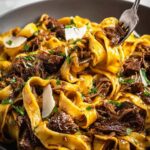
Short Rib Ragu with Pasta Recipe
- Prep Time: 30 minutes
- Cook Time: 3 hours
- Total Time: 3 hours 30 minutes
- Yield: 6 servings
- Category: Main Course
- Method: Stovetop
- Cuisine: Italian
Description
A rich and hearty Short Rib Ragu featuring tender, slow-simmered beef short ribs in a flavorful tomato and red wine sauce, perfect for serving with thick pasta like pappardelle or tagliatelle. This comforting dish is ideal for cozy dinners and impresses with its deep, robust flavors.
Ingredients
Meat
- 2 lbs beef short ribs – de-boned, cut into 2″ cubes
Vegetables & Aromatics
- 1 cup white onion – finely diced
- ½ cup celery – finely diced
- ½ cup carrot – finely diced
- 4 garlic cloves – finely minced
Liquids & Sauces
- 2 tablespoon light olive oil (or vegetable or avocado oil)
- 1 cup red wine
- 1 cup broth – beef or chicken
- 1 ¾ cup crushed tomatoes – 14 oz can
- 2 tablespoon sherry or red wine vinegar
Herbs & Seasonings
- Herb bundle – rosemary, thyme, parsley stems
- 2 bay leaves
- Kosher salt
- Fresh cracked black pepper
Pasta & Garnish
- 1 lb pasta – tagliatelle or pappardelle
- Chopped parsley for garnish
- Grated Parmigiano Reggiano for garnish
Instructions
- Season the short ribs: Generously season the beef short ribs on all sides with kosher salt to enhance flavor before cooking.
- Sear the short ribs: Heat 2 tablespoons of light olive oil in a large braiser or Dutch oven over medium-high heat. Add the short ribs in batches to avoid crowding and sear on all sides until browned. Remove the ribs and set aside. Drain excess grease if necessary, leaving no more than 2 tablespoons in the pot.
- Sauté vegetables: Add diced onion, celery, carrot, and minced garlic to the same pot. Sauté over medium-high heat for 3 to 4 minutes until the onions soften and the mixture becomes fragrant.
- Add tomato paste and seasoning: Stir in 2 tablespoons of tomato paste along with 1 teaspoon kosher salt and ½ teaspoon freshly cracked black pepper. Cook for another 2 to 3 minutes to deepen the flavors.
- Deglaze with wine: Pour in the red wine to deglaze the pot, scraping up all the browned bits from the bottom to incorporate their flavor into the sauce.
- Combine ingredients for simmering: Return the seared short ribs to the pot, then add the broth and crushed tomatoes. Toss in the herb bundle and bay leaves.
- Simmer the ragu: Bring to a low simmer, cover the pot leaving the lid slightly ajar to allow steam to escape, and cook for 2 to 2 ½ hours until the ribs are fork tender. Monitor occasionally and add broth or water if needed to keep the sauce from drying out. If ribs are not tender by 2 ½ hours, continue simmering for up to 30 more minutes.
- Shred the meat and finish sauce: Remove and discard the bay leaves and herb bundle. If using boneless ribs, shred the meat in the pot with forks; if bone-in, carefully remove bones before shredding. Taste and adjust seasoning, then stir in the sherry or red wine vinegar. If the sauce is too thin, simmer uncovered for an additional 15 to 30 minutes until desired consistency is reached.
- Cook pasta and serve: Prepare your choice of pasta according to package instructions. Serve the ragu over the pasta and garnish with chopped parsley and grated Parmigiano Reggiano.
Notes
- Using de-boned short ribs cut English style into cubes is preferred for convenience, but bone-in short ribs add more depth of flavor.
- Stewing beef cubes can be used as a more affordable substitute with good results.
- This ragu is versatile: enjoy it with pasta, polenta, as ravioli filling, layered in lasagna, alongside roasted vegetables, or even atop hummus.
- Recommended pastas are thicker, hearty shapes such as pappardelle, tagliatelle, orecchiette, rigatoni, or cavatelli to hold the robust sauce well.
- Adjust the cooking liquid as needed during simmering to prevent the sauce from drying out.
- The cartilage around bones can be removed if not desired after shredding the meat.
Nutrition
- Serving Size: 1 serving
- Calories: 650 kcal
- Sugar: 6 g
- Sodium: 700 mg
- Fat: 35 g
- Saturated Fat: 12 g
- Unsaturated Fat: 18 g
- Trans Fat: 0 g
- Carbohydrates: 45 g
- Fiber: 6 g
- Protein: 45 g
- Cholesterol: 130 mg