Pistachio Macarons with Cream Filling Recipe
If you’re ready to up your baking game with a treat that’s as stunning as it is scrumptious, I’ve got just the thing for you: my Pistachio Macarons with Cream Filling Recipe. These delicate, nutty, and perfectly creamy macarons are a showstopper every time I serve them at gatherings or just for a cozy afternoon pick-me-up. Trust me, the effort is 100% worth it once you bite into that crisp shell and buttery filling combo. Stick with me and I’ll walk you through everything so you can nail these beauties in your own kitchen!
Why This Recipe Works
- Nutty Flavor Fusion: Combining almond and pistachio flour gives these shells a uniquely rich, earthy taste that sets them apart.
- Perfectly Stable Meringue: The cream of tartar and fine granulated sugar create a sturdy meringue essential for smooth, crack-free shells.
- Classic Laduree-Inspired Filling: The pistachio cream is luxuriously buttery and sweetened just right to complement the shells without overpowering them.
- Patient Folding Technique: Taking your time with macaronage ensures each shell has that signature light and glossy surface, with the right “foot” at the base.

Ingredients & Why They Work
Every ingredient in this Pistachio Macarons with Cream Filling Recipe plays a specific role, from texture to flavor. I recommend investing in quality nut flours and using room temperature eggs for the fluffiest meringue – these little tips make a huge difference for your end result.

- Almond Flour: Use super fine almond flour to keep macaron shells smooth and prevent gritty texture.
- Pistachio Flour: Homemade pistachio flour gives a fresher, stronger pistachio taste compared to store-bought.
- Powdered Sugar: Helps sweeten the shells and contributes to that signature macaron texture.
- Egg Whites: Room temperature egg whites whip into the best meringue – never cold from the fridge!
- Fine Granulated Sugar: Dissolves quickly in the meringue, helping it stabilize and achieve stiffness.
- Cream of Tartar: Optional but recommended to stabilize your meringue and avoid collapse.
- Coarse Kosher Salt: Balances the sweetness and enhances nutty flavors.
- Green Gel Food Coloring: Adds a vibrant pistachio-green hue without thinning the batter like liquids do.
- Granulated Sugar & Water (Syrup for Filling): Creates a smooth sugar syrup essential for the buttercream filling consistency.
- Egg Yolks: Make the filling rich and luscious when properly tempered with syrup.
- Unsalted Butter: Soft room temperature butter smooths the filling and adds creaminess.
- Pistachio Paste: Pure pistachio flavor packed into the filling for authenticity.
Make It Your Way
I love to play around with the filling sometimes, adding just a touch of white chocolate or a pinch of cardamom to complement the pistachio’s earthiness. Feel free to tweak this Pistachio Macarons with Cream Filling Recipe to suit your vibe or the occasion.
- Variation: Adding a teaspoon of rose water to the buttercream creates a beautiful floral note – it’s a personal favorite twist I discovered during a moonlit baking session.
- Dietary Modification: You can substitute the butter with a non-dairy spread to make these vegan-friendly, though expect slightly different textures.
- Seasonal Change: Try folding in a bit of chopped pistachios on top of each shell before baking for an extra crunch and eye-catching look during festivities.
Step-by-Step: How I Make Pistachio Macarons with Cream Filling Recipe
Step 1: Prep Your Dry Ingredients
Start by sifting together the almond flour, pistachio flour, and powdered sugar—twice, to be exact. If you notice some chunky bits left in your sifter, toss those away; they can cause rough macaron shells. This double-sifting is a step I never skip because it really sets up the smooth texture and perfect feet that macarons are known for.
Step 2: Whip Up Your Meringue
Use room temperature egg whites for this. In a clean bowl with your mixer’s whisk attachment, combine egg whites, granulated sugar, cream of tartar, and salt. Whip on medium speed until you reach soft peaks first. Trust me, this part takes patience—I usually set my KitchenAid to speed 4 and it goes for about 30 to 40 minutes. Don’t rush it! Once soft peaks form, add a drop of green gel food coloring and continue whipping until you get stiff peaks. The meringue should hold sharp peaks and look glossy—think thick clouds that stick to your whisk when lifted.
Step 3: Fold in the Dry Ingredients – The Magic of Macaronage
Now for the fun and most crucial step: gently folding the dry mixture into the meringue. Sift the dry ingredients again over the meringue, then carefully fold with a silicone spatula. Here’s my secret: fold clockwise starting from the bottom, cutting through the center, and gently lifting and turning the batter to avoid deflating it too fast. Aim to fold about 50 times, then test by dropping a bit of batter into the bowl; it should flatten out and disappear into itself in about 10 seconds. Getting the batter to this “lava-like” consistency is how you’ll get those smooth tops and perfect feet.
Step 4: Pipe Your Macarons
Transfer your batter to a piping bag fitted with a round tip (I like using Wilton 2A). Pipe rounds of about 1.5 inches in diameter, spacing them roughly an inch apart on parchment-lined trays. To keep your shells even and uniform, I sometimes use my macaron template underneath the parchment. Once piped, firmly tap the trays against your counter to release air bubbles—use a toothpick to pop any stubborn bubbles you see on top.
Step 5: Rest Before Baking
This rest isn’t just downtime—it’s essential. Leave your shells out on the counter for at least 15 minutes or until they form a slightly dry skin on top. This step helps prevent cracking and promotes the development of those signature “feet” during baking.
Step 6: Bake to Perfection
Preheat your oven to 300°F (150°C). Bake each tray on the middle rack for 15 to 18 minutes. To keep the tops from browning too much, especially if you’re making large batches, place an empty baking sheet on the top rack as a shield. When you test a macaron, it should feel firm and not wobble when moved. If it’s still soft underneath, bake a bit longer, but don’t overdo it—micromanaging your oven is part of the challenge here!
Step 7: Cool Completely
Before you even think about peeling, let your macarons cool fully on their baking mats. This can take 20-30 minutes. Patience pays off here — peeling too early can tear or crack those delicate shells.
Step 8: Whip Up the Laduree Pistachio Cream Filling
The filling is where the nutty magic meets creamy luxury. Start by boiling sugar and water in a saucepan until it reaches 250°F (120°C) — the perfect soft-ball stage. Meanwhile, beat your egg yolks until doubled in size and pale, about 2 minutes. Pour the hot syrup slowly into the yolks (off to the side to prevent splatter), then crank up your mixer and beat till the mixture cools to about 104°F (40°C) and looks smooth and white. Add softened butter and pistachio paste, continuing to beat until silky. This luscious cream is the heart of your filling.
Step 9: Assemble and Mature
Match your cooled shells by size. Pipe a good dollop of the pistachio cream onto one shell, then sandwich gently with its pair. Press lightly to spread the filling to the edges without squishing out. Here’s a tip I learned: store your filled macarons in the fridge for at least 24 hours. This resting phase mellows the cookies and lets the filling soak in, giving you that dreamy texture that’s worth the wait.
Tips from My Kitchen
- Patience with Meringue: Don’t rush whipping your egg whites—waiting for stiff peaks brings strong shells.
- Gentle Folding: Overmix and your shells spread too thin; undermix and they crack—count your folds carefully.
- Resting Time Matters: Let your piped shells rest even longer if humid—this helps to get perfect feet.
- Use a Template: I print mine out and place under parchment for consistent sizing – a game changer if you want those professional-looking rounds.
How to Serve Pistachio Macarons with Cream Filling Recipe

Garnishes
I like to sprinkle a few crushed pistachios on top of freshly piped shells before baking for extra texture and visual appeal. Sometimes a tiny dusting of edible gold dust makes these treats feel extravagant and special, perfect for gifting or celebrations.
Side Dishes
These pistachio macarons pair beautifully with a light green tea or a sparkling elderflower lemonade, striking a balance to the rich cream filling. For a more dessert-y spread, I like them alongside fresh berries or a simple vanilla panna cotta for an elegant afternoon tea.
Creative Ways to Present
For special occasions, I arrange these macarons in a layered box lined with pastel tissue paper or serve them on tiered dessert stands. Wrapping individual macarons in clear cello bags tied with ribbon turns them into adorable party favors everyone will rave about.
Make Ahead and Storage
Storing Leftovers
I store my filled macarons in an airtight container in the fridge, where they keep beautifully for up to 5 days. Just remember to bring them out about 30 minutes before serving so they soften up and their flavors open up.
Freezing
If I’m prepping ahead, I freeze the filled macarons after they’ve matured in the fridge for 24 hours. Wrapped tightly, they freeze well for up to 3 months without losing texture or flavor, which is a lifesaver for busy days.
Reheating
To enjoy frozen macarons, I thaw them in the fridge overnight and then let them sit at room temp for about 30 minutes. This helps preserve that coveted chewy softness and luscious filling experience.
FAQs
-
What if my macaron shells crack during baking?
Cracking usually means your macarons didn’t rest long enough to form that skin or your oven temperature is too high. Be patient with the resting stage and consider using an oven thermometer to ensure accurate heat. Sometimes, humidity in the air can also cause cracks, so resting might need to be longer on damp days.
-
Can I make pistachio flour at home?
Absolutely! Just pulse shelled pistachios in a food processor until fine, then sift to separate any bigger bits. Pulse any large pieces again. Homemade pistachio flour tastes fresher and more vibrant than store-bought and really boosts that pistachio flavor in your macarons.
- How do I know when the meringue is ready?
The meringue should be glossy and firm enough to hold stiff peaks. When you lift your whisk, the peaks should stand straight without drooping. Also, the meringue will form distinctive sharp ribs and a ball around the whisk.
-
How long can I store the filled macarons?
Store them in an airtight container in the fridge for up to 5 days. For longer storage, freeze them after 24 hours of maturing in the fridge, and they’ll keep well for up to 3 months.
Final Thoughts
Making these Pistachio Macarons with Cream Filling Recipe has been one of my favorite baking adventures. It’s such a rewarding feeling when you pull out those perfectly glossy shells and sandwich them with that dreamy pistachio cream. More than just a recipe, it’s a little ritual that brings joy and a touch of elegance to any day. Give it a try—I promise you’ll be surprised at how approachable it is with the right guidance, and the smiles you’ll get from sharing these are priceless.
Print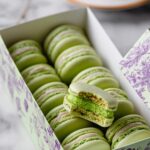
Pistachio Macarons with Cream Filling Recipe
- Prep Time: 1 hour
- Cook Time: 18 minutes
- Total Time: 1 hour 18 minutes
- Yield: 20 filled macarons
- Category: Dessert
- Method: Baking
- Cuisine: French
- Diet: Vegetarian
Description
A classic French pistachio macarons recipe featuring delicate pistachio-flavored almond shells filled with a smooth Laduree-style pistachio creme filling. These elegant treats combine a crisp outer shell with a soft, chewy interior and a rich nutty filling, perfect for special occasions or an indulgent dessert.
Ingredients
For Pistachio Macaron Shells:
- 60 g fine almond flour
- 40 g fine pistachio flour
- 65 g powdered sugar
- 70 g egg whites at room temperature
- 75 g fine granulated sugar
- 1/4 teaspoon cream of tartar
- 1/4 teaspoon coarse kosher salt
- 1/8 teaspoon green gel food coloring
For Laduree Pistachio Creme Filling:
- 65 g granulated sugar
- 2 tablespoons water
- 2 egg yolks
- 55 g unsalted butter at room temperature
- 20 g pure pistachio paste
Instructions
- Preheat and prepare baking sheets: Preheat the oven to 300°F (150°C). Line two baking sheets with parchment paper, Teflon sheets, or silicone mats.
- Sift dry ingredients: Sift almond flour, pistachio flour, and powdered sugar together twice, discarding any chunky bits left in the sifter.
- Make the meringue: In a clean mixing bowl with a whisk attachment, combine egg whites, granulated sugar, cream of tartar, and coarse kosher salt. Beat on medium speed until soft peaks form, about 30-40 minutes.
- Add food coloring: Add a drop of green gel food coloring to the meringue and continue beating on medium-low speed until hard peaks form. The meringue should hold sharp, pointy peaks and ball up inside the whisk.
- Fold dry ingredients into meringue: Sift the dry ingredients again into the meringue. Using a silicone spatula, fold gently but thoroughly until fully incorporated and the batter flows enough to draw a figure eight. Test using small amounts; small peaks should dissolve within 10 seconds. Avoid over-folding and aim for about 50 folds before testing.
- Pipe macaron shells: Transfer batter to a pastry bag fitted with a round tip (Wilton 2A recommended). Pipe 1.5-inch rounds about an inch apart on prepared baking sheets using a 90° angle. Tap the baking sheet firmly on the counter to remove air bubbles and use a toothpick to pop large bubbles.
- Rest the shells: Let the piped macarons rest at room temperature for 15 minutes to form a skin.
- Bake macarons: Bake one sheet at a time on the middle oven rack for 18 minutes, placing an empty baking sheet on the top rack to prevent browning. Test doneness by gently touching and trying to move a macaron; it should be firm and not wobble.
- Cool shells: Allow the macarons to cool completely on the baking mats before peeling them off.
- Make pistachio creme filling: In a small saucepan, combine sugar and water; bring to a boil while stirring until sugar dissolves. Continue cooking until syrup reaches 250°F (120°C), about 5 minutes. Meanwhile, beat egg yolks until doubled in size and pale, approximately 2 minutes.
- Combine syrup and yolks: Slowly pour the hot syrup into the beaten egg yolks while mixing on low speed, pouring down the side of the bowl to avoid splatter. Increase speed to medium-high and beat until mixture cools to 104°F (40°C) and becomes smooth and white.
- Incorporate butter and paste: Add unsalted butter, pistachio paste, and optional green food coloring to the mixture. Beat until smooth and creamy. Transfer filling to a pastry bag with a round tip.
- Assemble macarons: Pair macaron shells by size, arrange with bottoms facing up on a wire rack. Pipe filling onto bottom shells, then place top shells over filling and press lightly to spread the filling evenly to edges.
- Mature and serve: Store assembled macarons in an airtight container in the fridge for at least 24 hours to mature. Bring macarons to room temperature about 30 minutes before serving.
Notes
- Use super fine almond flour to ensure smooth macaron shells.
- Homemade pistachio flour can be made by pulsing pistachios in a food processor and sifting to remove chunks.
- Commercial powdered sugar contains cornstarch for better texture; avoid making your own.
- Fine granulated or caster sugar dissolves better for meringue.
- Cream of tartar is optional but stabilizes egg whites and helps create sturdier meringue.
- For baking, place an empty tray on the top rack to prevent browning of shells.
- Store filled macarons in an airtight container in the fridge for up to 5 days or freeze after maturing for up to 3 months.
- Let macarons rest at room temperature before baking to develop shells’ skin—this is essential for good texture.
- Folding batter properly (macaronage) is critical for shells’ texture; about 50 folds usually needed.
Nutrition
- Serving Size: 1 filled macaron
- Calories: 95 kcal
- Sugar: 9 g
- Sodium: 35 mg
- Fat: 5 g
- Saturated Fat: 3 g
- Unsaturated Fat: 2 g
- Trans Fat: 0 g
- Carbohydrates: 11 g
- Fiber: 1 g
- Protein: 2 g
- Cholesterol: 27 mg