Korean Beef Bowl Recipe
If you’ve been craving a meal that’s quick, packed with flavor, and genuinely satisfying, you’re going to love this Korean Beef Bowl Recipe. It’s one of those dishes I turn to when I want something comforting but still vibrant and fresh. Trust me, once you try this, it’ll easily become a weeknight favorite that’s ready in about 20 minutes flat!
Why This Recipe Works
- Balanced Flavors: The combo of savory soy sauce, sweet honey, and zingy ginger make each bite a flavor explosion.
- Quick & Easy Preparation: From start to finish, this recipe takes about 20 minutes—perfect for busy nights.
- Fresh, Crisp Toppings: Pickled carrots and cucumbers add that fresh crunch that brightens the bowl beautifully.
- Versatile & Customizable: You can swap rice for quinoa, and adjust seasonings to suit your taste effortlessly.

Ingredients & Why They Work
Each ingredient in this Korean Beef Bowl Recipe plays a special role, creating a perfect harmony of taste and texture. I always recommend grabbing fresh ginger and scallions—they really lift the dish from good to restaurant-quality right at home.

- Lean ground beef: I like 93% lean for a good balance of flavor and less grease—lean but juicy beef holds up well with these bold seasonings.
- Low sodium soy sauce: Using low sodium lets you control saltiness better without overpowering the other flavors.
- Scallions: Both the green and white parts give a fresh onion note—don’t skip them!
- Garlic: Adds warmth and depth; fresh is always best here.
- Rice vinegar: Key for pickling the veggies and adding acidity to balance sweetness.
- Honey: Offers a gentle natural sweetness that complements the savory soy sauce.
- Fresh ginger: Grated finely, it brings a punch of aromatic spice I find essential.
- Red pepper flakes: Just enough heat for a subtle kick—add more if you like things spicy!
- Sesame oil: That nutty finish that makes the whole bowl feel authentically Korean.
- Carrots, cucumbers, sesame seeds: Toppings that brighten and texturize each bite—plus the pickling step is a game changer.
Make It Your Way
One of the best things about this Korean Beef Bowl Recipe is how easy it is to tailor. Personally, I like to experiment with different toppings or swap out rice for cauliflower rice when I want a lighter meal. You should definitely play around and find your perfect combo!
- Spicy Upgrade: When I’m craving more heat, I toss in extra red pepper flakes or a drizzle of gochujang (Korean chili paste)—it seriously amps up the flavor.
- Vegetarian version: Try swapping the ground beef for crumbled tofu or cooked lentils to keep the umami taste but make it meat-free.
- Seasonal Veggies: Feeling adventurous? Add sautéed mushrooms or steamed broccoli to the bowl for more texture and nutrients.
Step-by-Step: How I Make Korean Beef Bowl Recipe
Step 1: Pickle the Veggies for Brightness
Before cooking the beef, I always start by letting the carrots and cucumbers lightly pickle. Just toss them with rice vinegar, a bit of water, sugar, and salt. This not only softens their bite slightly but also gives a fresh tang that balances the rich beef perfectly. While you cook everything else, they marinate themselves—smart multitasking!
Step 2: Brown the Beef with Aromatics
Get your skillet hot over medium-high and add the lean beef, breaking it up with a spatula. When it’s halfway cooked, pour in a tablespoon of soy sauce and two-thirds of your scallions to infuse flavor. Once browned, quickly stir in minced garlic, cooking just 30 seconds so it doesn’t burn but releases that garlicky aroma that hooks you in.
Step 3: Add the Sauce and Finish Cooking
Mix rice vinegar, honey, fresh ginger, red pepper flakes, and remaining soy sauce in a small bowl. Pour this over the beef and stir well. Let it cook for 2 minutes to thicken and coat the meat, then remove from heat and drizzle in sesame oil. Sprinkle the rest of your scallions on top for a fresh pop. Taste and tweak with extra soy or chili if you want—this step is all about making it your flavor.
Step 4: Assemble Your Bowl and Garnish
Serve the warm beef over your choice of brown rice, quinoa, or cauliflower rice for a low-carb twist. Then pile on those pickled carrots and crisp cucumbers, finishing with a sprinkle of toasted sesame seeds. This contrast of textures and flavors really makes each bite hit just right.
Tips from My Kitchen
- Don’t Overcook the Beef: Keep an eye while browning—overcooked beef turns dry, so cook just until it’s no longer pink.
- Fresh Ginger Power: I’ve learned that grating ginger finely instead of chopping gives a smoother, more even heat.
- Pickle for Punch: The quick-pickled veggies might seem optional, but they bring a brightness that transforms the entire bowl.
- Adjust Seasoning at the End: Taste before serving and add soy or chili flakes little by little to get your perfect balance every time.
How to Serve Korean Beef Bowl Recipe

Garnishes
I love topping this bowl with toasted sesame seeds—they add a lovely nutty crunch. Sometimes I throw on extra fresh scallions or a few cilantro leaves if I’m feeling fancy. And if you like a bit of creaminess, a dollop of plain yogurt or even some sliced avocado is a delicious twist.
Side Dishes
Pair this beef bowl with a simple cucumber kimchi or steamed broccoli to keep things fresh and vibrant. I also like serving it alongside some miso soup or a seaweed salad when I’m in the mood for a full Korean-inspired meal.
Creative Ways to Present
For dinner parties, I’ve served this in stylish stone bowls to keep it warm longer. Another fun idea is to turn it into lettuce wraps using butter lettuce leaves for a handheld, low-carb option everyone enjoys. It’s also great layered in mason jars for easy grab-and-go lunches.
Make Ahead and Storage
Storing Leftovers
After enjoying your meal, store any leftovers in an airtight container in the refrigerator. I’ve kept mine fresh for up to four days without any loss in flavor or moisture, which means it’s perfect for weekday lunches or quick dinners.
Freezing
If you want to freeze the Korean Beef Bowl Recipe, separate the beef mixture and the pickled veggies. Freeze the beef in a freezer-safe container for up to three months—just thaw overnight in the fridge before reheating. I’ve found freezing the veggies isn’t ideal as they lose texture, so keep those fresh.
Reheating
Reheating is a breeze—warm the beef gently in a skillet over medium-low heat to prevent it drying out. If you’re in a rush, the microwave works fine too. Add the pickled veggies fresh after reheating to keep that crunch intact.
FAQs
-
Can I use a different type of meat in this Korean Beef Bowl Recipe?
Absolutely! While ground beef is classic and convenient, ground turkey or chicken can work well too if you want a leaner option. You can even experiment with thinly sliced steak or pork if you prefer a different texture or flavor profile.
-
Is it necessary to pickle the carrots and cucumbers?
Not strictly, but I highly recommend it. The quick pickling brightens the dish wonderfully by adding acidity and crunch, balancing the savory richness of the beef. If you’re short on time, fresh veggies still work great—just skip the pickling step.
-
Can I meal prep this recipe for lunches?
For sure! This Korean Beef Bowl Recipe reheats beautifully and keeps well in the fridge for several days. Pack the beef and rice separately from the pickled veggies to maintain freshness and crunch. It makes for a nutritious, flavorful lunch ready in minutes.
-
What if I don’t have rice vinegar?
If you don’t have rice vinegar on hand, you can substitute with apple cider vinegar or white wine vinegar in equal parts. The flavor might shift slightly but will still provide the essential acidity needed for balancing the flavors.
Final Thoughts
This Korean Beef Bowl Recipe holds a special place in my weekly rotation because it’s quick, comforting, and endlessly tasty. Every time I make it, friends ask for seconds—and that pickled veggie kick? It’s pure magic. I really hope you’ll give it a go and make it your own, because sharing meals like this always feels like a little celebration of simple, delicious cooking.
Print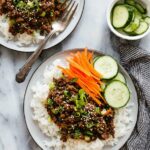
Korean Beef Bowl Recipe
- Prep Time: 10 minutes
- Cook Time: 10 minutes
- Total Time: 20 minutes
- Yield: 4 servings
- Category: Main Course
- Method: Stovetop
- Cuisine: Korean
- Diet: Low Lactose
Description
This Korean Beef Bowl features lean ground beef cooked with savory soy sauce, garlic, ginger, and a touch of sweetness from honey. Served over your choice of brown rice, quinoa, or cauliflower rice and topped with crunchy pickled carrots, fresh cucumbers, and toasted sesame seeds, this dish offers a perfect balance of bold and fresh flavors for a quick and satisfying meal.
Ingredients
For the Beef
- 1 pound lean ground beef (93% lean)
- 3 tablespoons low sodium soy sauce plus additional to taste, divided
- 1 1/4 cups minced scallions (both green and white parts)
- 1 tablespoon minced garlic (about 3 cloves)
- 2 tablespoons rice vinegar
- 2 tablespoons honey
- 2 tablespoons minced or finely grated fresh ginger
- 1/4 teaspoon red pepper flakes plus additional to taste
- 1 tablespoon sesame oil plus additional to taste
For Serving
- Cooked brown rice, quinoa, or cauliflower rice
- 1 1/2 cups shredded carrots (see notes for pickling)
- Thinly sliced seedless cucumbers (Persian-style or English/hot house)
- Toasted sesame seeds
Instructions
- Pickle Vegetables: Place shredded carrots and cucumbers in a medium bowl. Add 2 tablespoons rice vinegar, 2 tablespoons water, ½ teaspoon sugar, and ½ teaspoon kosher salt. Toss to coat and let marinate gently while preparing the beef. Drain before serving.
- Cook Beef: Heat a large skillet over medium-high heat. Add ground beef and cook, breaking it into small pieces, until browned and cooked through, about 5 minutes. When beef is halfway cooked, add 1 tablespoon soy sauce and 2/3 of the minced scallions. Stir occasionally.
- Add Garlic: Once beef is fully cooked and browned, stir in minced garlic and cook for 30 seconds until fragrant.
- Make Sauce: In a small bowl, mix together the rice vinegar, honey, grated ginger, red pepper flakes, and remaining soy sauce.
- Combine Sauce and Beef: Pour the sauce over the beef and stir to combine. Cook for 2 more minutes to blend flavors.
- Finish: Remove the skillet from heat and stir in sesame oil. Sprinkle the remaining scallions on top. Taste the beef mixture and add more soy sauce or red pepper flakes as desired.
- Serve: Serve the beef hot over cooked brown rice, quinoa, or cauliflower rice. Top generously with pickled carrots, cucumbers, and toasted sesame seeds.
Notes
- To pickle the carrots and cucumbers, let them marinate in vinegar mixture while cooking the beef, then drain before serving for a nice tangy crunch.
- Leftovers can be stored in an airtight container in the refrigerator for up to 4 days.
- Reheat leftovers gently in a skillet over medium-low heat or use a microwave for convenience.
- For freezing, store beef and vegetables separately in freezer-safe containers for up to 3 months. Thaw in the refrigerator overnight before reheating.
Nutrition
- Serving Size: 1 bowl
- Calories: 400 kcal
- Sugar: 8 g
- Sodium: 600 mg
- Fat: 18 g
- Saturated Fat: 6 g
- Unsaturated Fat: 10 g
- Trans Fat: 0 g
- Carbohydrates: 35 g
- Fiber: 4 g
- Protein: 30 g
- Cholesterol: 75 mg