Coq au Vin Recipe
If you’re looking to impress your friends or just want to enjoy a cozy meal that’s bursting with deep, rustic flavors, you’ve got to try my absolutely fan-freaking-tastic Coq au Vin Recipe. This classic French dish is all about tender chicken, smoky bacon, earthy mushrooms, and that rich wine sauce that just makes you want to savor every single bite. Whether you’re cooking for a special occasion or just craving a comforting dinner, stick with me—I’m going to walk you through everything so your Coq au Vin turns out just perfect every time.
Why This Recipe Works
- Depth of Flavor: Slow braising in red wine and chicken stock builds complex, savory layers you won’t find in a quick stew.
- Perfectly Tender Chicken: Bone-in, skin-on pieces stay juicy and develop beautiful caramelization before slow cooking.
- Balance of Ingredients: Crispy bacon, mushrooms, and pearl onions add texture and flavor contrast that keeps every bite interesting.
- Flexible and Make-Ahead Friendly: You can prep ahead and reheat, making it ideal for dinner parties or a special family meal.

Ingredients & Why They Work
Each ingredient in this Coq au Vin recipe plays a starring role in creating that signature rich yet comforting flavor. Choosing the right elements — like good quality wine and bone-in chicken — really makes the difference between “meh” and “wow”. Also, don’t worry if you can’t find pearl onions fresh; I have a little trick for that below.

- Chicken Thighs & Drumsticks: The dark meat stays juicy and tender; bone-in gives the dish extra flavor.
- Lardons or Bacon: Adds smoky, savory notes that deepen the sauce.
- Yellow Onion and Carrots: Create a natural sweetness to balance the acidity of the wine.
- Garlic: Boosts aroma and flavor without overpowering the dish.
- Tomato Paste: Adds umami and thickens the sauce.
- All-Purpose Flour: Helps brown the veggies and chicken and thickens the sauce.
- Red Wine (Burgundy or Pinot Noir): The star of the stew’s sauce — fruity and earthy with nice acidity.
- Bay Leaf & Fresh Thyme: Classic French herbs that add warmth and depth.
- Chicken Stock: Adds body and layers of flavor; homemade is great but store-bought works fine.
- Butter: For richness and finishing the sauce with that glossy, velvety texture.
- Pearl Onions: Small bursts of sweetness and texture; use frozen or canned if fresh aren’t available.
- Cremini Mushrooms: Earthy flavor and meaty texture pair beautifully with the chicken.
- Parsley: Brightens everything with a fresh, herbal note at the end.
Make It Your Way
This Coq au Vin recipe is wonderfully forgiving and loves a little personalization. I often swap out the mushrooms for wild varieties when I find them, or add a splash of cognac for an extra layer of flavor. You can also go lighter by using skinless chicken if you want less fat, although I recommend keeping the skin for the best texture and flavor.
- Vegetarian Variation: Replace chicken with hearty mushrooms, and use vegetable stock for a vegetarian-friendly twist.
- White Wine Version: Try substituting with a dry white wine and fresh tarragon for a lighter flavor profile.
- Seasonal Changes: Add root vegetables like parsnips or turnips in the fall for extra sweetness.
- Spice It Up: A pinch of smoked paprika or chili flakes adds a surprising warmth I love on cooler days.
Step-by-Step: How I Make Coq au Vin Recipe
Step 1: Prep and Sear the Chicken for Flavor
First, I pat the chicken dry — this is a crucial step so you get that gorgeous golden crust and not soggy skin. Season generously with salt and pepper. When browning the chicken, don’t overcrowd the pot; I like to do it in batches so each piece can properly caramelize. This browned crust is where so much flavor starts, so take your time here and resist the urge to rush.
Step 2: Build Flavor with Veggie Sauté and Wine Reduction
After removing the chicken, I soften onions and carrots in the same pot to soak up those bacon drippings and browned bits. Stir in garlic, tomato paste, and flour — cooking them helps avoid any raw flour taste. Then comes my favorite part: adding the red wine and scraping up every fond bits stuck to the bottom. This is magic in the making. Simmering until the wine reduces by half concentrates all those wonderful flavors.
Step 3: Slow Braise and Enhance with Mushrooms and Onions
Once the wine reduction is ready, I add chicken stock, season, and nestle back the chicken, bacon, and herbs, then cover and pop it in the oven. This slow braise makes the chicken incredibly tender. As it cooks, I sauté pearl onions and mushrooms separately with butter — browning them just right adds that extra texture and flavor when they join the stew at the end.
Step 4: Finish the Sauce and Serve
After the chicken is beautifully tender, I remove the herbs and thicken the sauce with a beurre manié— a simple mix of flour and butter. If you like a thicker sauce, just add more. Finally, toss in the onions, mushrooms, and fresh parsley for a bright finish. Serve the chicken right in the pot or on a warm platter, spooning the luscious sauce over everything.
Tips from My Kitchen
- Patience with Browning: Taking time to brown the chicken and bacon well is the key to an exceptionally flavorful dish.
- Use a Good Red Wine: Cooking with a wine you’d happily drink makes a huge taste difference; it doesn’t have to be expensive, but avoid ‘cooking wine’ bottles.
- Frozen Pearl Onions Are Your Friend: If fresh ones aren’t in season, frozen pearl onions do the trick and cut down on prep time.
- Don’t Skip the Rest Time: Leaving the dish to sit a bit after cooking lets flavors marry beautifully—often tastes better the next day!
How to Serve Coq au Vin Recipe

Garnishes
I love finishing my Coq au Vin with a generous sprinkle of fresh chopped parsley; it just brightens the deep rich flavors and adds a pop of color. Sometimes, a little cracked black pepper on top right before serving amps up the aroma. If you’re feeling fancy, a light drizzle of extra virgin olive oil can add silkiness.
Side Dishes
Classic French country bread or creamy mashed potatoes are my go-to sides because they soak up all that delicious sauce. You’ll also find that buttery egg noodles or even roasted root vegetables pair beautifully. For a fresh touch, a simple green salad with a tangy vinaigrette cuts through the richness perfectly.
Creative Ways to Present
For special dinners, I like to serve Coq au Vin in individual rustic mini cocottes—each guest gets their own little pot filled with chicken, veggies, and sauce. It looks so charming and keeps everything warm. Another fun idea is layering the chicken and sauce over creamy polenta for a twist on the usual potatoes.
Make Ahead and Storage
Storing Leftovers
After the feast, any leftover Coq au Vin stores beautifully in an airtight container in the fridge for up to five days. I recommend letting it cool completely before sealing to avoid condensation that can water down the sauce. Plus, the flavors only get better as they mingle overnight!
Freezing
I’ve frozen Coq au Vin multiple times with great results. Just cool it fully, then pack in a freezer-safe container or heavy-duty bag and freeze up to three months. When ready, thaw overnight in the fridge for best texture and flavor.
Reheating
To reheat, I spoon off any solidified fat from the surface first—this prevents greasiness. Then I gently warm it over medium-low heat on the stove, stirring occasionally and adding a splash of chicken stock or wine if the sauce has thickened too much. Alternatively, I sometimes reheat in the oven at 350°F for about 30 minutes, covered, which helps maintain tenderness without drying out the chicken.
FAQs
-
Can I use chicken breasts instead of thighs and drumsticks for this Coq au Vin recipe?
While you technically can use chicken breasts, I don’t recommend it because breasts tend to dry out during the long braising process. Dark meat like thighs and drumsticks hold moisture better and develop richer flavor, making them ideal for Coq au Vin.
-
What type of wine is best for Coq au Vin?
The classic choice is a Burgundy or Pinot Noir—something medium-bodied with fruity and earthy notes. The wine should be good enough to drink since its flavor really shines in the sauce. Avoid cheap cooking wines as they often have off flavors.
-
Can I prepare Coq au Vin a day ahead?
Absolutely! Coq au Vin tastes even better the next day after all the flavors have had time to meld. Just let it cool completely before refrigerating, and gently reheat when ready to serve.
-
How do I peel pearl onions if they’re fresh?
A handy trick is to blanch the pearl onions in boiling water for about one minute then transfer to ice water. The skins will loosen and slip right off. If you want to save time, frozen or canned pearl onions work just fine in this recipe!
Final Thoughts
This Coq au Vin recipe is truly one of my favorite dishes to make when I want something heartwarming yet special. It’s the kind of meal that sparks conversation, invites lingering at the table, and fills the kitchen with unforgettable aromas. Trust me, once you get the hang of these steps, this cozy French classic will become a go-to for your dinner rotation, impressing friends and family alike. So pour yourself a glass of your favorite red, roll up your sleeves, and let’s make some magic happen—bon appétit!
Print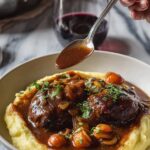
Coq au Vin Recipe
- Prep Time: 15 minutes
- Cook Time: 1 hour 20 minutes
- Total Time: 1 hour 35 minutes
- Yield: 4 servings
- Category: Main Course
- Method: Baking
- Cuisine: French
- Diet: Low Lactose
Description
Coq au Vin is a classic French dish featuring tender chicken braised in red wine with bacon, mushrooms, and pearl onions, creating a rich and flavorful stew perfect for a comforting meal.
Ingredients
Chicken and Meat
- 4 bone-in, skin-on chicken thighs
- 4 chicken drumsticks
- 4 ounces lardons or slab bacon, diced
Vegetables and Aromatics
- 1 large yellow onion, chopped
- 2 large carrots, peeled and cut diagonally in 1-inch pieces
- 4 cloves garlic, minced
- 8 ounces peeled pearl onions
- 8 ounces cremini mushrooms, sliced
Liquids and Stocks
- 1 bottle (750ml) red wine, preferably a Burgundy or Pinot Noir
- 3 cups chicken stock, homemade or store-bought
Fats and Thickeners
- 2 ½ tablespoons vegetable oil
- 4 tablespoons unsalted butter
- Beurre manié: 1 tablespoon flour and 1 tablespoon softened butter (optional)
Herbs and Seasonings
- Salt and freshly ground black pepper, to taste
- 1 tablespoons tomato paste
- 1 tablespoon all-purpose flour
- 1 bay leaf
- 5 sprigs fresh thyme, tied with kitchen twine
- ⅓ cup chopped parsley
Instructions
- Preheat and Season: Preheat the oven to 350ºF. Pat dry the chicken pieces with paper towels and season generously with salt and freshly ground black pepper. Set aside.
- Cook Bacon: In a large Dutch oven or heavy-bottomed pot, heat 1 teaspoon vegetable oil over medium-high heat. Add diced lardons or bacon and cook until golden brown, about 6-8 minutes. Remove with a slotted spoon and reserve, leaving drippings in the pot.
- Brown Chicken: Add more oil if necessary. Add chicken pieces without overcrowding and brown all sides, about 8-10 minutes. Work in batches if needed. Remove chicken and lardons to a plate and reserve.
- Prepare Vegetables: If excess fat is rendered, drain or wipe off leaving about 1 tablespoon in the pot. Lower heat to medium, add chopped onion and carrots, cook until onions soften, about 3 minutes. Stir in minced garlic and cook for one minute.
- Add Tomato Paste and Flour: Stir in tomato paste and cook for one minute, then add flour and cook another minute to remove raw flour taste.
- Deglaze with Wine: Pour in the red wine and add thyme sprigs and bay leaf, scraping browned bits from the bottom. Cook until wine reduces by half, about 10 minutes, skimming foam off the surface.
- Add Stock and Simmer: Add chicken stock and season with salt and pepper. Bring to a boil, then add back the chicken pieces, lardons, and any accumulated juices.
- Braise in Oven: Cover and transfer pot to the preheated oven. Cook for 45 minutes until chicken is very tender.
- Sauté Pearl Onions: With about 15 minutes left, heat 1 tablespoon oil and 2 tablespoons butter in a sauté pan over medium-high heat. Add pearl onions and a pinch of salt. Cook until browned, 5-8 minutes. Remove and reserve.
- Sauté Mushrooms: Add another tablespoon oil and 2 tablespoons butter to the pan. Sauté mushrooms until browned, 8-10 minutes. Season with salt and pepper, then remove and reserve with onions.
- Remove Chicken and Herbs: After braising, carefully remove chicken to a plate and tent with foil to keep warm. Remove and discard bay leaf and thyme sprigs from the pot.
- Thicken Sauce (Optional): Make beurre manié by mixing 1 tablespoon softened butter with 1 tablespoon flour if thicker sauce is desired. Return pot to medium-high heat, adding beurre manié in small amounts to thicken sauce. Thin with stock or wine if too thick. Adjust seasoning to taste.
- Add Vegetables and Parsley: Stir in ¼ cup chopped parsley, reserving rest for garnish. Add sautéed pearl onions and mushrooms to the sauce.
- Serve: Either return the chicken to the pot, garnish with remaining parsley, and serve directly or pour sauce over chicken on a serving dish and garnish with parsley.
Notes
- Make Ahead: Coq au Vin develops deeper flavors when made one or two days ahead. Cool completely before refrigerating.
- Leftovers: Store in an airtight container in the fridge for up to 5 days.
- Freezing: Freeze up to 3 months. Thaw overnight in the fridge before reheating.
- Reheating: Remove any solidified fat before reheating. Reheat gently on stovetop adding stock or wine if needed, or in the oven at 350ºF for about 30 minutes.
- If pearl onions are unavailable, substitute with small shallots or frozen pearl onions.
- Use good quality dry red wine such as Burgundy or Pinot Noir for best flavor.
Nutrition
- Serving Size: 1 serving
- Calories: 550 kcal
- Sugar: 5 g
- Sodium: 600 mg
- Fat: 35 g
- Saturated Fat: 12 g
- Unsaturated Fat: 18 g
- Trans Fat: 0 g
- Carbohydrates: 15 g
- Fiber: 3 g
- Protein: 40 g
- Cholesterol: 135 mg